What a real sanctuary actually feels like
By Jennifer Stoeckl, MAT - Dire Wolf Project CEO, May 26, 2026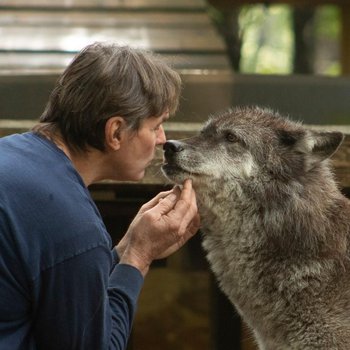
The first thing I noticed about Big Oak Wolf Sanctuary was the smell of the rain.
Florida rain settles differently than rain in the dry places I remembered before.
It sinks into the sandy ground beneath the pine trees and pulls the scent of wet bark, standing water, moss, and old leaves back into the air long before sunrise.
Humidity clings to my fur there.
By morning, silver droplets gather along the chain-link fencing while the sanctuary slowly wakes beneath the trees.
During those first days, I stayed near the back corner of my enclosure where the shadows lingered longest after dawn.
I watched everything.
After enough frightening mornings, you learn to study movements before they reach you.
I watched the tree line, the gates, the humans, but most of all, their hands.
The old place had taught me that hands often moved faster once voices changed.
Before the first pale light fully reached the sanctuary paths each morning, the forest already sounded alive around us.
Frogs pulsed endlessly from the low wetlands beyond the fencing.
Cicadas screamed from the pine branches overhead until the sound seemed to vibrate through my ribs.
Somewhere deeper inside the sanctuary, one of the older wolves would lift his muzzle toward the dark sky and begin howling before sunrise.
The others answered almost immediately.
Their voices rolled through the trees enclosure by enclosure until the entire sanctuary seemed awake around me.
One older female ended every howl with a rough break in her voice that sounded painful, as though the air itself scraped her throat raw each time she called into the darkness.
Younger wolfdogs joined later, their voices uncertain at first before blending into the rest of the pack.
I did not answer them in the beginning.
I stayed near the shadows where the fencing met the tree line and listened instead.
That was usually when I first heard John and Debra coming down the gravel paths.
Metal feed buckets knocked softly against one another beneath the trees while fresh water sloshed gently over the rims as they walked.
I could smell breakfast before I ever saw them.
Raw meat carried through the damp morning air alongside cedar shavings, wet soil, standing water, sweat, pine needles, and wolves.
The sanctuary smelled like wolves everywhere.
The scent clung to the grass and fencing.
It lingered beneath the gates and along the narrow pacing trails worn into the sandy ground by nervous feet moving the same paths over and over again through the years.
The wolves nearest the gates usually rose first once they heard John approaching.
Some paced excitedly along the fencing while others stretched lazily before trotting toward him.
One enormous gray male leaned so heavily against the chain-link each morning that the fencing rattled beneath his weight while John rubbed behind his ears.
John laughed quietly at him once when the wolfdog nearly pushed the bucket from his hands.
The sound startled me, even though nothing sharp hid inside it.
I remember watching John carefully because he moved differently from the humans I had known before.
Even carrying heavy buckets through thick Florida heat, he never rushed through the sanctuary.
He seemed to understand the wolves were studying him long before he reached the gates.
Debra moved the same way.
She carried fresh water buckets from enclosure to enclosure beneath the trees while speaking softly to each wolfdog by name.
Sometimes she paused beside the fencing to scratch thick fur behind an ear or rest her hand gently against the side of a massive neck before moving farther down the path.
Nobody had spoken my name gently before arriving there.
The humans from the old place liked standing beside me when strangers visited.
They tightened my leash shorter whenever people came close because they wanted my ears forward and my eyes alert for photographs.
They smiled proudly while telling everyone I was part wolf, but they never learned what my different barks meant.
They never noticed how I paced during thunderstorms or how I froze whenever somebody cornered me near a doorway.
At first, the shouting usually came later.
Then the doors started slamming harder.
The leash stayed tighter.
Rooms became smaller.
Walks became shorter.
By the end, most of the humans smelled nervous before they even touched me.
Some of the neighbor wolves still carried that same nervousness inside them.
I could see it ripple through the sanctuary whenever a gate slammed unexpectedly somewhere beyond the trees.
Heads lifted instantly.
Bodies stiffened.
One wolfdog would begin pacing while another started whining softly beneath his breath.
Sometimes the fear spread through several enclosures before the sound that caused it had even fully faded.
One morning, a new volunteer followed Debra down the sanctuary path carrying a feed bucket against her leg.
I smelled her fear before I saw her.
It cut sharply through the humid air beneath the scent of sunscreen and bug spray.
Her boots hesitated constantly on the gravel path while she glanced toward the older volunteers ahead of her, studying where they stood and how close they moved beside the fencing.
I noticed immediately and stared at her.
A nearby wolf lifted his muzzle and turned both ears forward.
By the time she reached my enclosure, a younger wolfdog farther down the path had already begun circling nervously beside his gate.
Another started whining softly while watching her hands tighten around the metal bucket handle.
Nobody shouted at the nervous volunteer.
And nobody jerked the wolves backward from the fencing.
The older volunteers simply slowed their movements and kept speaking calmly while the sanctuary settled itself again beneath the trees.
I sighed in relief and let my body relax.
The first time Debra sat near my enclosure without asking anything from me, the morning heat had already begun rising from the sandy ground.
Dragonflies drifted above the water trough while warm wind moved softly through the pine branches overhead.
Nearby, one younger wolfdog splashed noisily through his water trough while another stretched beneath a patch of shade chewing steadily on a large bone.
Debra lowered herself slowly into the grass near the fencing.
Then she waited.
She never stared directly at me.
She never called repeatedly for me to come closer.
She never pushed her hands through the fencing toward me.
She simply sat beneath the trees while mosquitoes drifted through shafts of sunlight overhead and wolves called softly back and forth somewhere deeper in the sanctuary.
I stepped closer before I fully realized I had decided to move.
My paws pressed quietly into the warm sand while every muscle in my body remained tight enough to flee if fear returned.
I moved slowly enough to hear pine needles crack softly beneath my feet.
Debra remained still.
Nothing changed except the distance between us.
For the first time in years, something inside my chest loosened instead of tightening.
The feeling reminded me of frozen ground softening beneath the first warm days after winter.
I see the same change happening throughout the sanctuary now.
One wolfdog who once hid constantly now waits openly at the gate each morning listening for John’s boots along the gravel path.
Another presses his giant head against Debra’s chest while she scratches the thick fur beneath his neck.
Wolves who once trembled at every movement now rest quietly beneath the fencing while familiar voices drift through the warm Florida air around them.
Every morning, the gates open again beneath the trees.
Footsteps and fresh water arrives again.
And after enough mornings pass, frightened creatures slowly begin waiting near the gates instead of hiding from them.
John eventually gathered many of these stories into a remarkable book called The Sanctuary.
It carries the same spirit that lives beneath the Florida trees at Big Oak Wolf Sanctuary: wolves, grief, trust, healing, photographs, and the extraordinary patience required to help wounded creatures believe they are finally safe.
I am going to order the full package edition myself, including the enormous coffee table version filled with sanctuary photographs, because after spending time there, I wanted to help those morning footsteps continue along the gravel paths for many years to come.
If you feel drawn to stand beside these wolves too, you can learn more about supporting the sanctuary and receiving a copy of the book here:
https://johnknightsthesanctuary.com/about-the-book
Until tomorrow, my dear pack.
Jennifer Stoeckl is the co-founder of the Dire Wolf Project, founder of the DireWolf Guardians American Dirus Dog Training Program, and owner/operator of DireWolf Dogs of Vallecito. She lives in the beautiful inland northwest among the Ponderosa pine forests with her pack of American Dirus dogs.