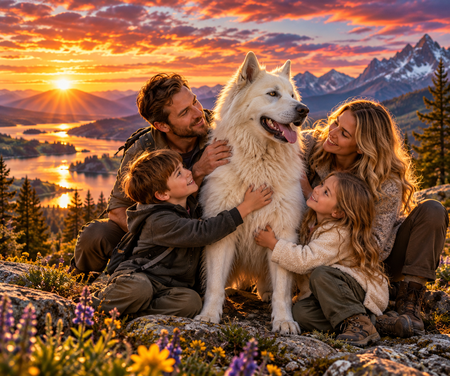
"Adopt, Don't Shop" is a lie.
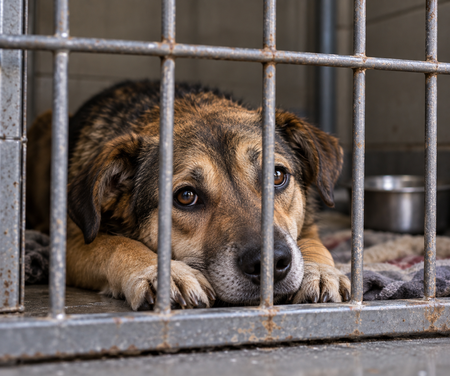
The shelter and rescue industry does not own the moral high ground on animal welfare.
Responsible breeders do.
Let's be clear... animal welfare does not begin when a homeless dog arrives at a shelter. It begins before a dog is ever conceived, with the decisions that determine whether that animal will be born healthy, whether its identity and family history will be preserved, where it will go, and who will remain responsible for it for the rest of its life.
The existence of homeless dogs does not itself prove that deliberately producing a dog is immoral. It proves that somewhere in the lives of those homeless dogs, human responsibility failed.
So, let's not spend time apologizing for deliberately producing dogs, knowing who their parents are, investigating hereditary health, preserving their identities, choosing their homes carefully, supporting their families, and remaining responsible when something goes wrong.
Instead, let's see if the "Adopt, Don't Shop" ideology can defend its own standard.
If animal welfare means preventing suffering, preserving a dog's history, taking accountability for where that animal came from, accounting for what happens to it throughout its life, and accepting responsibility for the life created, then the shelter/rescue system has some explaining to do.
We condemn the “Adopt, Don’t Shop” ideology surrounding the shelter/rescue system. As you'll see, this ideology is morally corrupt, promotes deception, lies to the public, is emotionally manipulative, and hypocritical.
Here's why:
1. Shelter and rescue can never prevent inherited suffering.
Animal welfare should begin before an animal exists because preventing inherited disease is more humane than discovering it after a puppy has already inherited it.
The Dire Wolf Project uses DNA, pedigree and family-health information, orthopedic evaluation when appropriate, and screening for hereditary conditions relevant to our breed to decide whether a breeding should occur. That gives us the ability to prevent a puppy from inheriting avoidable disease rather than merely discovering that disease after the puppy has been born.
Inherited disease prevention does not exist within the shelter/rescue model. And the real consequence of that appears when an inherited health problem develops. Without a pedigree or multigenerational health history, the family cannot determine whether the same condition appeared in parents, siblings, or previous generations, nor can they call a breeder with firsthand knowledge of the family line who might recognize a pattern and provide context. Instead, the family and its veterinarian must begin investigating without that history, which can mean additional diagnostic testing, greater expense, more uncertainty, and more time spent trying to understand what is happening while the dog experiences the condition.
Preventing avoidable inherited disease before conception, and preserving the family history needed when a health problem does arise, is the higher animal-welfare standard. The Dire Wolf Project can do both.
2. Rescue promotes dog trafficking.
A dog can travel thousands of miles from its country of origin through an importer, rescue organization, transporter, veterinary provider, shelter, foster home, and interstate transfer before finally being handed to an American family who only know the last organization in that chain and have no idea where the dog actually came from or how it got there.
This is not hypothetical. Dogs have been imported into the United States from Egypt for rescue and adoption, and federal investigations of rabid imported dogs have documented false or inaccurate rabies vaccination records accompanying animals into the country. Once false information enters a chain of custody, every organization downstream can inherit and repeat it while the dog's actual history becomes harder to reconstruct.
The United States also has no universal cradle-to-adoption provenance system requiring one complete record of a rescue dog's origin and every subsequent transfer to remain attached to that animal through importation, transportation, shelters, rescues, fosters, interstate relocation, and final adoption. A microchip does not create that missing biography, and neither does the name of the shelter that happened to possess the dog last.
That means an adopter can be told that a dog was “transferred in from Georgia” when Georgia identifies only one stop in the dog's journey. The animal could have arrived there from another state, a U.S. territory, or even another country. Unless the earlier history was preserved and passed forward accurately, the adopter has no way to reconstruct it after the fact.
Someone can therefore adopt a dog from a Georgia shelter, love that animal for years, run a DNA test, and discover 100% Indian Pariah Dog ancestry. Suddenly “Georgia” explains nothing.
Was the dog imported into the United States? Did it live on the streets of another country? Who collected it? Who transported it? Who brought it across the border? Which organizations possessed it before Georgia? What happened during the part of its life for which no records remain?
The owner can ask every one of those questions and still never receive an answer because the dog cannot testify to its own history, and paperwork cannot reveal information that was never recorded, was lost, or was false to begin with.
That loss follows the animal home. If a serious health or temperament question develops later, the family cannot recover biological parents whose identities were never preserved, reconstruct early experiences nobody documented, locate siblings nobody recorded, obtain hereditary information that never followed the animal, or call the person who deliberately produced the dog and knows its family.
Meanwhile, money moves through this same rescue supply chain through adoption fees, donations, grants, transportation, veterinary services, facilities, fundraising, and payroll. Dogs are acquired, transported, housed, advertised, transferred, and distributed. An industry capable of moving living animals across cities, states, territories, and international borders should therefore be capable of preserving the complete history of those animals all the way to the families receiving them.
The Dire Wolf Project does not ask families to accept that kind of mystery. Our dogs begin with identifiable parents, a preserved pedigree, DNA-verified parentage, family-health information, and a documented place of birth. We know where the dog started because we were there when its life began, and our responsibility follows that dog throughout its life.
Remember: a transfer source is not an origin. Paperwork beginning halfway through a dog's life is not provenance. When an animal can cross an international border with false information and then move through a system that does not preserve one continuous cradle-to-adoption record, the family at the end can inherit a dog whose true history is gone forever.
3. Shelters and rescues euthanize 877 dogs a day.
On average, 877 dogs are euthanized in American shelters and rescues every single day.
Think about the scale of that number. By the end of one week, more than 6,000 dogs have been euthanized. Keep that pace going for a year and approximately 320,000 dogs are dead.
The Dire Wolf Project did not produce those dogs, surrender them, admit them into shelters, or decide which would live and which would die. Yet breeders and the people who buy from them are told that those deaths belong on their consciences.
Those 877 daily deaths demand examination of where those dogs originated, why they entered custody, what happened while they were there, and why euthanasia became their final outcome.
The Dire Wolf Project accepts responsibility for the dogs we produce. The shelter/rescue system should accept responsibility for the life-and-death decisions made about dogs in its custody.
4. 44,000 dogs die or become lost in shelter and rescue care every year.
Euthanasia is not the only way dogs fail to leave the shelter/rescue system alive and accounted for. Beyond the dogs euthanized, approximately 44,000 additional dogs die or become lost while entrusted to shelter and rescue care each year.
That is approximately 120 dogs every day that either die in care or become lost by the organizations responsible for keeping them safe.
A dog that dies in custody entered that system alive and never came back out. A dog recorded as lost was entrusted to an organization that was supposed to know where it was, and at some point that organization could no longer account for it.
If I lost a Dire Wolf Project dog entrusted to me, I would be expected to explain exactly how it happened, just as I would be expected to answer for a dog that died in my custody.
Forty-four thousand dogs dying or becoming lost while entrusted to an animal-welfare system is a failure that deserves an explanation.
5. The pet store is now an “adoption center.”
I know the old pet-store puppy model firsthand because my mother owned one in the 1990s. Breeders supplied puppies, those puppies were transported to retail locations where people wanted dogs, the stores presented them to customers, people chose the dogs they wanted, money changed hands, and the dogs went home.
Now follow a rescue dog. Dogs are acquired where they are available and transported to places where adopters are more likely to want them. Once there, they are photographed, advertised online, displayed at adoption events, and even offered through pet stores and retail adoption partnerships. People browse the available dogs, choose one, pay an adoption fee, and take the dog home.
The terminology changed, but the basic market mechanism did not: acquire dogs, move them toward consumer demand, advertise them, present them to prospective owners, collect money when they are placed, and repeat.
Breeders are condemned simply for supplying dogs to people who want them. But rescue relies on people wanting dogs too, and relocation proves it. If there were no demand in the destination market, there would be no reason to transport dogs there.
The Dire Wolf Project differs considerably from the old pet-store model because we are a direct-to-consumer breeder, and the demand for our puppies exists before we decide to produce them. Families join our waiting list before a breeding is planned, so we are not producing puppies first, transporting them into a retail market, and then searching for strangers willing to take them. We know there are families waiting for our dogs before we make the decision to bring those dogs into the world.
That distinction changes the entire chain of responsibility. We choose the parents, preserve the pedigree, investigate hereditary health, raise the litter ourselves, know where each puppy begins, and place that puppy directly with a family that deliberately sought a Dire Wolf Project dog. There is no anonymous producer at one end, distributor in the middle, and retail outlet at the other. The breeder who made the decision to produce the dog remains connected to the dog and its family after the transaction is complete.
Our model begins with a family waiting for a dog before that dog exists and continues with responsibility for that dog after it goes home. The retail model begins with dogs that already exist and then moves them toward markets where somebody is expected to take them. Today's rescues now fit this exact model.
Changing “sale” to “adoption,” “price” to “adoption fee,” and “pet store” to “adoption center” does not erase the underlying supply-and-demand model.
6. Rescue should never have been necessary in the first place.
The existence of homeless dogs is tragic, but responding to homelessness after it happens should never become the highest standard of animal welfare. The higher standard is to build responsibility around a dog before that dog is even conceived and then refuse to let that responsibility expire.
That is how the Dire Wolf Project operates.
Before a puppy exists, we decide whether the breeding should happen at all. We choose the parents deliberately, study pedigree and family-health information, investigate hereditary risk, and make breeding decisions based on what we know about the dogs involved. Once the puppies are born, every single Dire Wolf Project puppy is DNA tested, giving us verified genetic information rather than an identity based on appearance or assumption.
Before those puppies go home, another layer of responsibility is already in place. We maintain an extensive waiting list and a vetting process because obtaining one of our dogs is not simply a matter of being the next person willing to pay for one. We evaluate prospective homes, learn about the people waiting for our puppies, and work to match individual dogs with the families and environments we believe fit them. The objective is not merely to place the puppy. The objective is to make the placement work for the life of the dog.
And our responsibility does not end when the puppy leaves.
Every Dire Wolf Project dog is backed by our lifetime genetic health guarantee, as well as our Lifetime Stewardship Program, because the relationship between breeder, dog, and owner should survive long after the original transaction is over. If circumstances change years later, that family should still have somewhere to turn.
We have also created DireWolf Haven, our own nonprofit, specifically so that a Dire Wolf Project dog that needs a home can come back into our care. That need can be temporary or permanent. A family can face death, illness, divorce, financial catastrophe, housing loss, or another crisis that makes keeping the dog impossible, but the dog's connection to us does not disappear because the owner's circumstances changed.
That is what lifetime responsibility looks like. We do not want one of our dogs becoming an anonymous intake number because life went wrong for the person who owned it. We do not want a shelter trying to guess what the dog is, a rescue trying to reconstruct where it came from, or a stranger inheriting responsibility for an animal it doesn't have a connection with.
We know who the dog is because we know its parents. We know where it came from because it came from us. We have its genetic information because we tested it. We know the family we entrusted it to because we vetted that home. We support its health through a lifetime genetic health guarantee. We support its future through our Lifetime Stewardship Program. And if that future collapses, DireWolf Haven exists so the dog still has somewhere to go.
That creates one continuous chain of responsibility: before conception, through birth, through genetic testing, through placement, through adulthood, through an owner's crisis, and all the way to the end of the dog's life.
A dog produced under that system should never have to become somebody else's mystery. It should never have to lose its identity simply because it loses its home. And it should never have to depend upon an unrelated rescue organization to assume a responsibility that belonged to us from the beginning.
The goal of animal welfare should not be to build a better system for catching dogs after they fall. It should be to build a system in which the people who deliberately bring dogs into the world remain responsible for catching their own.
Written by:
Jennifer Stoeckl, MAT, OFS
October 1, 2026