Puppy Protection Act 2025: Congress vs. Puppies
By Jennifer Stoeckl, MAT - Dire Wolf Project CEO, Nov. 18, 2025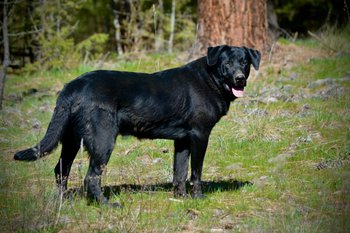
BOOM!
A wooden gavel hits a desk in Washington D.C.
And somewhere in a quiet home, your puppy yawns and stretches in complete bliss.
Meanwhile, lawmakers are sitting in air-conditioned chambers, pens in hand, scratching away on the Puppy Protection Act of 2025, convinced they are saving every tail, paw, and whisker in America.
The truth is, though, that those in Washington are mostly oblivious.
Lawmakers think they’re protecting puppies, but from the dog world’s point of view, they’re putting a leash on a hurricane.
The Puppy Protection Act of 2025 would amend the Animal Welfare Act and is aimed squarely at USDA-certified commercial breeders.
Yes, the ones cranking out puppies like little fluff-filled assembly lines.
It does not, currently, touch small direct-to-consumer breeders, like the Dire Wolf Project, who place pups directly into their final homes (like you).
But one big issue is the new proposal does not distinguish between those impersonal, industrial-scale kennels and the modest, ethical commercial breeders supplying pet stores.
Both are lumped together under this federal microscope.
With the stroke of a pen, suddenly, a family-run breeder with 25 golden retrievers and a heart full of love is under the same rules as a megakennel producing 200 beagle puppies a year.
And let’s talk about what this law proposes, because oh boy, it’s a veritable cartoon of “We Can Fix the World With Checklists!”
- Solid floors
- Temperature ranges (45–85°F for every single dog. Anywhere. Everywhere. Always.)
- Minimum space per dog based on body length
- Mandatory daily socialization (30 minutes… apparently timed like an Olympic event.)
Sure, it sounds nice, but the enforceable reality is laughable.
The USDA already has staffing issues.
Most inspectors are lucky if they even make it to the kennel every year.
Meanwhile, the same lawmakers are patting themselves on the back, thinking, “Yes! Puppies are safer!”
The problem is though that the congressmen and women writing these rules have never built a whelping box, or felt the sticky warmth of a newborn pup curling against your chest, and certainly have never chased a loose dog through a snowdrift at midnight.
They’re making rules for a world they’ve only seen in PowerPoint slides.
Click. Tap. Ding!
Another law drafted.
But what about reality?
We agree with Marlene Ruiz from the International Association of Canine Professionals that the real problems in dog breeding aren’t fixed by narrowly regulating floors, fences, or Instagram-worthy socialization charts.
They’re fixed with education, transparency, ethics, and (most importantly) enforcement of existing laws.
If lawmakers actually wanted to make real and lasting change in the commercial dog breeding space, perhaps they would consider some of the following ideas.
Imagine a world where every commercially bred puppy has a tracking label like a shipping barcode.
You can see where each puppy came from, how it got to each facility, and which breeder nurtured it.
Imagine a public directory of commercial breeders, scored like a restaurant’s health inspection, where the good shine and the bad are exposed.
Imagine a tiered licensing system: small, medium, and mega breeders treated according to their scale, instead of a one-size-fits-all approach that leaves the small commercial breeder swimming in bureaucracy doomed to fail.
And best of all, imagine shelters and rescues following those same rules, because yes… money changes hands there too, and oversight is sorely lacking.
That’s the world that would actually work.
But does Congress actually want to fix the issue of horrific conditions with mass puppy production, or just slap on more regulations that look good on paper.
Meanwhile, your sweet puppy is rolling in a pile of blankets, blissfully unaware of the bureaucratic snowstorm looming over America’s commercial breeding world.
And don’t think for one minute that this bureaucratic nonsense won’t ever touch the Dire Wolf Project!
Massachusetts is already eyeballing direct-to-consumer breeders.
Today, it’s federal commercial breeders.
Tomorrow, who knows?
If the trend continues, even the smallest ethical breeder could end up under the same absurd rules.
Intentions alone aren’t enough.
The dog breeding world is changing fast in our country.
If we truly want puppies safe, happy, and healthy, we need transparency, education, accountability, and real enforcement.
Not whimsical checklists dreamed up by people who have never heard a newborn litter squeak in the dead of night.
So, stay alert.
Because the wind is shifting.
And while Congress scribbles laws with fine pens in hallowed halls, it’s up to us to keep the heart of the pack alive.
As we consider the far-reaching impact of regulations like the Puppy Protection Act, it’s easy to get lost in policy, statistics, and mandates.
But the heart of this conversation… indeed, the very soul of responsible dog breeding… lives in the dogs themselves.
The calm guardians, the thoughtful companions, the steady-hearted partners who teach us what loyalty, patience, and devotion truly look like.
Chisel is one such dog.
He carries within him the quiet strength, the measured presence, and the deep emotional awareness that the Act hopes to protect in every puppy and adult dog across the country.
Yet unlike the faceless numbers in legislation, Chisel is alive, breathing, waiting for the family who will recognize his worth and cherish his legacy.
If you’ve ever wondered what it feels like to walk beside a creature who embodies the lessons of centuries, who moves through the world with calm assurance and a heart that mirrors your own, you can meet him today.
Learn more about Chisel and the life he’s waiting to share:
https://direwolfproject.com/pedigree/7394/
Jennifer Stoeckl is the co-founder of the Dire Wolf Project, founder of the DireWolf Guardians American Dirus Dog Training Program, and owner/operator of DireWolf Dogs of Vallecito. She lives in the beautiful inland northwest among the Ponderosa pine forests with her pack of American Dirus dogs.