The trait never before seen in the dog world
By Jennifer Stoeckl, MAT - Dire Wolf Project CEO, May 6, 2026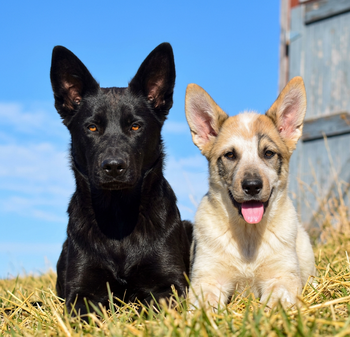
Yesterday evening, while making my final rounds through the kennels, I found myself thinking about a question someone asked over on Facebook earlier.
“What category does the American Dirus™ Dog fit into?”
At first, the answer seems straightforward. Most people expect a dog to fall neatly into a familiar category. Herding dog. Guardian dog. Protection dog. Sporting dog. Livestock dog. Hunting dog.
But the American Dirus™ dog does not fit comfortably inside the traditional framework people are accustomed to using when they think about large breeds.
Part of the confusion comes from the breeds behind the American Dirus™ dog itself.
People see German Shepherd Dogs, Mastiffs, livestock guardians, and sighthounds in the ancestry, then assume the finished result must possess the same intense working characteristics commonly associated with those breeds.
Then they meet one of our dogs in person.
The contradiction catches them off guard.
They expect explosive motivation, environmental intensity, reactive behavior, and constant readiness for action.
Instead, they encounter a giant dog quietly watching the world with calm, thoughtful awareness.
Many of our dogs are observant without being suspicious.
They pay attention without becoming frantic about every movement occurring around them.
Their minds remain steady instead of constantly searching for stimulation or conflict.
This difference is extremely important because many people unintentionally confuse the idea of a pet dog with the concept of a true companion dog.
Those two things are not necessarily the same.
A Belgian Malinois living inside a suburban home does not suddenly lose generations of inherited working drive simply because it sleeps on a couch at night.
A German Shepherd Dog living as a family pet still carries the emotional architecture of a guarding breed.
The instincts remain there beneath the surface, even when the dog never performs formal work.
The environment where a dog lives does not erase inherited temperament.
That distinction sits at the very heart of what Lois spent decades trying to accomplish.
From the beginning, the goal was never simply to create a beautiful animal.
The true challenge involved altering inherited emotional responses through careful generational selection.
For years, Lois systematically selected the calmest and most emotionally stable dogs while moving away from excessive prey drive, environmental sensitivity, defensive sharpness, hyperactivity, anxiety, and restless working intensity.
That sort of temperament work requires extraordinary patience because emotional traits do not shift cleanly or quickly.
Every generation must be observed carefully.
Puppies must be evaluated honestly.
Breeding decisions must prioritize long-term temperament consistency over temporary excitement or fashionable trends.
Over time, the dogs began changing.
Their nervous systems became calmer.
Their responses became slower, more thoughtful, and more measured.
Instead of immediately reacting to every stimulus in the environment, many of the dogs began processing information with a quiet sort of intelligence that is difficult to describe until you experience it firsthand.
This is one reason so many people struggle to believe these dogs are real once they meet them.
The modern dog world has spent generations glorifying higher drive, faster reactions, sharper intensity, and stronger working motivation.
Those qualities absolutely have value inside true working breeds, and we strongly believe working breeds should retain the abilities they were originally created to perform.
We fully agree, for example, that German Shepherd Dogs should continue demonstrating sound working ability and stable guarding instincts through legitimate evaluation standards.
Preserving the original purpose of a working breed protects both the breed itself and the people who rely upon those traits.
But the American Dirus™ dog was founded for an entirely different purpose.
The breed was developed specifically to step away from the working world and into companionship.
That does not mean the dogs are unintelligent or incapable.
Quite the opposite.
Many of them possess remarkable emotional awareness and excellent problem-solving ability.
However, their relationship with work differs dramatically from traditional working breeds.
Most of our dogs possess relatively low motivation compared to modern working lines.
Owners often discover they must put substantial effort into encouraging enthusiasm for repetitive tasks because the dogs simply do not possess the same internal urgency driving many working breeds forward.
Even when they do work, their approach often feels deliberate and thoughtful rather than explosive or frantic.
Ironically, that same calm and emotionally steady temperament has also allowed some of our dogs to excel in particular forms of service work.
A dog with a quiet nervous system can often remain present and observant during situations that would emotionally exhaust a more reactive animal.
In many ways, the American Dirus™ dog represents an entirely different philosophy regarding what a large dog can become.
For centuries, humanity bred dogs primarily around labor.
Dogs hunted, guarded, protected, retrieved, tracked, controlled livestock, eliminated vermin, hauled supplies, and defended territory.
Their emotional structure evolved around those responsibilities.
The American Dirus™ dog followed another path.
The goal was to create a giant dog capable of peacefully existing within the emotional rhythm of modern family life while still retaining intelligence, physical beauty, confidence, and stable awareness of the world around it.
That sort of temperament does not emerge accidentally.
It took Lois years of disciplined selection to begin stabilizing those traits, and even today we continue refining and protecting the emotional consistency that defines the breed.
Perhaps that is why so many people have difficulty categorizing these dogs.
The world has seen giant working dogs, giant guardian breeds, and giant protection dogs.
But the world has never truly seen a large breed developed specifically around the inherited temperament requirements of companionship itself.
And perhaps that is exactly why the American Dirus™ dog feels so unusual when you finally stand beside one in person beneath the quiet pines of the Inland Northwest.
The clearest way to understand what we mean is to spend time observing puppies like Mr. Toffee and Lollipop Meadow.
These two young American Dirus™ dogs carry exactly the sort of calm emotional presence we have spent decades trying to preserve within the breed.
There is a quietness about them that is difficult to explain through photographs alone.
Visitors often expect giant puppies to bounce wildly through the world with chaotic energy, but these two prefer to watch first, think first, and approach life with a kind of soft confidence that immediately captures attention.
Mr. Toffee possesses an especially thoughtful nature.
He studies people carefully, settles easily into companionship, and carries himself with the sort of steady awareness that makes you feel as though an old soul is quietly walking beside you through the pines.
Lollipop Meadow has a beautiful gentleness about her.
She moves through the world with patience and emotional softness while still carrying the striking prehistoric presence that makes the American Dirus™ dog feel so unforgettable in person.
Both puppies represent the direction Lois spent years shaping within the breed.
They are excellent examples of the calm, emotionally balanced companion temperament that helped define the American Dirus™ dog from the very beginning.
If you would like to see more photos and learn more about these extraordinary puppies, you can visit:
https://direwolfdogs.com/dogs-for-sale/puppies/
Somewhere out there, one of these young companions may already be waiting quietly for their future family to find them
Jennifer Stoeckl is the co-founder of the Dire Wolf Project, founder of the DireWolf Guardians American Dirus Dog Training Program, and owner/operator of DireWolf Dogs of Vallecito. She lives in the beautiful inland northwest among the Ponderosa pine forests with her pack of American Dirus dogs.